Showing posts with label back pain. Show all posts

Sunday, July 10, 2011

Lumbar Laminectomy Aftercare Exercises

Overview
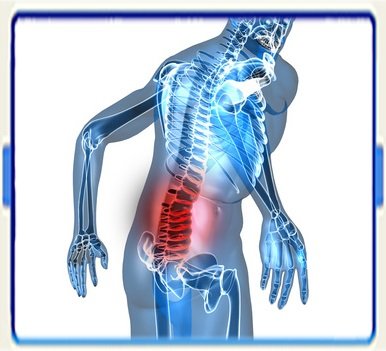
Your lumbar spine is the lower portion of your back where five vertebra rest. The lumbar region is prone to injury and spinal degeneration. If your lumbar disc slips out of place, bulges or a bone spur forms, you can experience pain because the disc presses on the spinal nerves. The solution for this is a lumbar laminectomy, a procedure that removes diseased portions of spinal vertebra to reduce pressure on the spinal nerves. In addition, a surgeon may use screws or rods to fuse the vertebra together to strengthen them. After surgery, your physician may recommend physical therapy exercises to strengthen and stretch your lower back.

Leg Slides
Leg slides are an ideal exercise following lumbar laminectomy because they encourage blood flow to the legs while strengthening the lower spine. This exercise can be performed while in bed following surgery. To begin, lie on your back with your legs extended. Bend your right leg, placing your right foot on the bed. Contract your stomach and lower back muscles to slowly slide the leg to a straight position. When you have straightened the leg, slowly slide the leg in toward your starting bent-knee position. Repeat five times on your right leg, then repeat on the left side.

Straight Leg Raise
This exercise is known as a lumbar stabilization exercise, meaning it helps to strengthen the muscles that support your lumbar spine. Perform this exercise when your physician has given you permission to begin stretching. Start by lying on your back with your legs extended. Your arms can be extended from your shoulders or straight at your sides with your palms facing down. Flex the left foot and slowly lift it in the air toward your chest. Stop when you meet resistance, then lower the leg to your starting position. Repeat this exercise 10 times, then switch to your right foot.

Supported Dying Bug
The dying bug exercise strengthens the core muscles of your abdomen and lower back following a lumbar laminectomy procedure. Wait at least one week following surgery or until your physician says you can perform core strengthening exercises. You can place a pillow under your back to provide cushion and support following surgery. To perform the exercise, lie on your back and lift your legs in the air, bending them at the knees. Stop when your thighs are aligned with your hips and your thighs and lower legs make a 90-degree angle. Extend your arms overhead and reach your left hand toward your right knee, pulling the right knee in slightly. Return to your starting position and touch your right hand to your left knee. Continue alternating for 20 repetitions. As you gain strength, you can extend the leg the working arm is not touching.

Contralateral Leg Lift
This exercise should be performed when you have progressed in your physical therapy and your back feels stronger. Start on all fours with your back as straight as possible and your arms directly under your shoulders and your feet hip-width apart. Lift your right arm in the air, extending it at shoulder height. At the same time, extend your left leg backward, lifting it to align with your back. Maintain this position for 10 seconds, then lower the leg and arm. Continue to alternate your leg and arm for 10 repetitions.

OTHER RELATED INFORMATION

Please LIKE , Tweet , +1 and Share if you like this article...

Wednesday, October 7, 2009

Spinal Decompression for Back Pain Relief

Lumbar Laminectomy

If you constantly experience back pain, do not ignore it but seek medical attention as soon as possible, because the back pain may get worse over time. The common causes for back pain include herniated discs, degenerated discs, osteoarthritis, injury or overuse of muscles, facet joints, ligaments, and the sacroiliac joints. Prostrate cancer, bacterial infection and Scheuermann's disease can also cause severe back pain. Back pain can occur concentrated in one area or in the form of radiating pain from a central point. The most common symptoms include pain in neck and shoulders, numbness, weakness and burning sensation.

Spinal decompression is a non-surgical medical treatment effective for chronic back pain. Spinal decompression therapy is effective for back pain caused by a damaged disc. In the spinal decompression process, with proper distraction and relaxation, the spinal disc is isolated and kept under negative pressure to cause a vacuum effect. The treatment helps to take off the pressure from the damaged disc, causing the disc bulge to shrink back to the normal size. Spinal decompression therapy is reported to have a success rate ranging from 71% - 90 %. Patients can feel reduction in pain, after the first few sessions of the treatment itself. There are fewer chances for side effects with spinal decompression therapy treatment. Moreover the treatment is covered by most insurance companies.

Spinal decompression therapy is a cost-effective treatment for degenerative spinal disc disease. The entire treatment takes up to 20-40 treatment sessions depending upon the extremity of the condition. Each treatment session may take 25-30 minutes. After spinal decompression therapy, the patients should take care not to get out of bed alone. The assistance from therapists and nurses is necessary until you can walk alone. The patient should take advice from the physician before leaving the hospital. Spinal decompression therapy with its proven results is really a blessing for people who suffer from chronic back pain.

Article source: www.i-newswire.com

Lumbar Laminectomy

OTHER RELATED INFORMATION

Please LIKE , Tweet , +1 and Share if you like this article...

Tuesday, October 6, 2009

Safety of Lumbar Laminectomy in the Elderly (Lumbar Laminectomy)

Lumbar Laminectomy

Lumbar spinal stenosis is a common problem as we age. Narrowing of the spinal canal puts pressure on the spinal cord or spinal nerves. Back and leg pain that increases with activity such as walking can be very disabling. Spinal surgery is one treatment option for this condition.

Many studies have concluded that spinal surgery in adults aged 65 and older is risky. It should not be approached lightly. But what are the risks? And who should avoid spinal surgery?

In this study, data from the National Inpatient Sample (NIS) is used to answer these questions. Information from millions of patients from over 1,000 hospitals in 37 states is available in this database. From 1993 to 2002, almost half a million people had a lumbar laminectomy for spinal stenosis.

Analysis of the results for these patients showed the following:
# Problems and the death rate after spinal surgery for stenosis increases with age
# Patients 85 years old and older have the highest risk (almost 20 per cent for complications and 1.4 per cent for death)
# The more health problems a patient has, the greater the risk for problems after spinal surgery
# Men are at a slightly higher risk than women for complications

Having other health problems (called comorbidities) raises the risk of surgical complications. Patients with three or more comorbidities were much more likely to be discharged to some other setting than home. These various conditions ranged from heart failure to lung disease to alcohol abuse and depression. Cancer, arthritis, anemia, and thyroid problems are other common problems in older adults facing spinal surgery.

The National Inpatient Scale represents the largest study of lumbar surgery for spinal stenosis. The results suggest that this procedure has some risks. Surgeons can use a practical method of assessing risk when making treatment decisions with older adults who have spinal stenosis. Taking age and comorbidities into consideration are key factors in the decision-making process.

Article source: www.spineuniversity.com

Lumbar Laminectomy

OTHER RELATED INFORMATION

Please LIKE , Tweet , +1 and Share if you like this article...

Tuesday, September 15, 2009

Minimally Invasive Decompressive Lumbar Laminectomy

Lumbar Laminectomy

Decompressive lumbar laminectomy is a surgical procedure used to treat a condition referred to as lateral recess stenosis, which occurs when spinal nerves are pinched by narrowing of the sides of the spinal canal.

Symptoms:

Intense Pain
Numbness or weakness in one leg


This surgical procedure can also be used to treat lumbar canal stenosis, which occurs when the spinal canal becomes narrowed and the cauda equina becomes compressed. This condition has similar symptoms as lateral recess stenosis.

How is the procedure performed?

The patient is positioned on his or her stomach or side. A small incision is made in the lower back in order for the surgeon to see the pinched spinal nervew and/or the compressed cauda equina.

The surgeon then uses a retractor ot expose the vertebrae by spreading apart the muscles and fatty tissue of the spine. A small drill or bone biting instruments are used to remove a section of the vertebra. An opening is cut in the ligamentum flavum in order to reach the spinal canal.

The surgeon removes bone spurs and any rough edges on teh intervertebral disc. This enlarges the foramen and the spinal canal and helps relieve pressure on the spinal nerves.

If necessary, the surgeon will perform a spinal fusion with instrumentation to help stabilize the spine. A spinal fusion involves grafting a small peice of bone (usually taken from the patient's hip) onto the spine and using spinal hardware, such as screws, rods, or other mateal implants, to support the spine and provide stability.

Source: www.celebrationspinecenter.com

Lumbar Laminectomy

OTHER RELATED INFORMATION

Please LIKE , Tweet , +1 and Share if you like this article...

Decompressive Lumbar Laminectomy

Lumbar Laminectomy

A Lumbar Laminectomy is where the Lamina and sometimes part of the Facet Joints are removed to allow room for the Lumbar nerves. They are usually compressed because of a degenerative process in the spine.

The most common reason to consider this procedure is to treat spinal stenosis, or it may be used to treat Sciatica which causes numbness or weakness in your leg(s).

If you are having surgery it usually means that the symptoms have not gone away with other treatments such as physiotherapy, rest, anti-inflamatory medications in either oral or injectable form.

The cause of these symptoms is usually a progressive degenerative process in the spine where the facet joints enlarge, the disc bulges and the ligament becomes thicker. When things like this occur, they compress the nerves to the legs and can cause some serious symptoms.

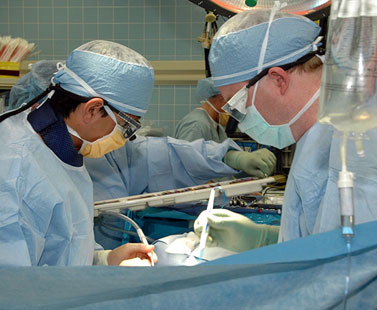
In the operating room, you are given a general anaesthetic and then positioned face down on a special frame. An incision is drawn on with a special pen, and the entire area is cleansed with an antiseptic solution. You are then covered in drapes so that only the incision can be seen. The level is checked with Xray. An incision is made through the skin down to the spinous process and the muscles moved out of the way. A retractor is used to keep them aside. The bone of the spinous process is removed using a special bone drill. The bone of the lamina and part of the facet joint might also be removed. This leaves the yellow ligament which is also removed to expose the dura and the compressed nerves.

Special attention is given to make sure that the nerves are completely decompressed. The openings under the facet joints that let the nerves out of the spine are checked and decompressed also if necessary.

Once this has been done and all bleeding is stopped the layers are then stitched back into their normal place. The skin will be closed with staples or sutures that will either have to be removed or dissolve on their own.

You will wake up in recovery and after about an hour be moved to your room. The nurses will continually monitor your vital signs and leg strength looking for any signs of complications. During the first night you will be awakened by the nurses to check your vitals and look for signs of complications. You will also have injections if needed for pain. This will be explained before surgery. Occassionally you will have trouble urinating and may require a catheter. You will also be encouraged to get up and walk a little.

The next day the IV will be removed from your arm after your next walk and then you will be given regular oral medication for pain. Gradually over the next 1 to 2 days you will be able to get around normally. When you are comfortable you will be able to go home.

Source: www.tsjh.org

Lumbar Laminectomy

OTHER RELATED INFORMATION

Please LIKE , Tweet , +1 and Share if you like this article...

Friday, September 11, 2009

Lumbar Laminectomy Recovery (Lumbar Laminectomy)

Lumbar Laminectomy

A lumbar laminectomy is a surgery that aims to relieve leg pain caused by conditions such as a herniated disc or spinal stenosis. The goal is to lessen the pressure on the spinal nerve or spinal cord by making the spinal canal wider. During the procedure, the surgeon removes or trims the roof of the vertebrae to allow for more space for the nerves. Follow these steps to learn how to recover from a lumbar laminectomy.

Step 1: Move frequently used items to shoulder-height before surgery so you can get to them without bending over. This includes toiletries and groceries.

Step 2: Stay in the hospital for one to three days following a lumbar laminectomy. Your doctor will give you a post-operative recovery plan to follow.

Step 3: Know that your time line for returning to normal activity will depend heavily on your age and health prior to the surgery.

Step 4: Try walking as soon as you can following a lumbar laminectomy. Make sure you have someone there to support you, if needed, and take a few steps until you're exhausted.

Step 5: Wear slip-on shoes with closed backs so you don't have to bend over to tie laces. This will make getting dressed much easier.

Step 6: Arrange to have someone help you with chores around the house. Also get someone to drive you around on any errands for a week or two after surgery.

Step 7: Avoid excessive twisting, lifting and bending for at least six weeks following a lumbar laminectomy. These actions can cause the sutures to pull or tear.

Step 8: Return to doctor's office to get the sutures removed, if necessary. Some surgeons use the kind that dissolve.

Lumbar Laminectomy

OTHER RELATED INFORMATION

Please LIKE , Tweet , +1 and Share if you like this article...

Monday, September 7, 2009

What You Need To Know About Lumbar Laminectomy

Lumbar Laminectomy

Laminectomy is a spine operation to remove the portion of the vertebral bone called the lamina. There are many variations of laminectomy, in the most minimal form small skin incisions are made, back muscles are pushed aside rather than cut, and the parts of the vertebra adjacent to the lamina are left intact. The traditional form of laminectomy (conventional laminectomy) excises much more than just the lamina, the entire posterior backbone is removed, along with overlying ligaments and muscles. The usual recovery period is very different depending on which type of laminectomy has been performed: days in the minimal procedure, and weeks to months with conventional open surgery.

As pictured, the lamina is a posterior arch of the vertebral bone lying between the spinous process, which juts out in the midline, and the more lateral pedicles and transverse processes of each vertebra. The pair of laminae, along with the spinous process, make up the posterior wall of the bony spinal canal. Although the literal meaning of laminectomy is excision of the lamina, the operation called conventional laminectomy, which is a standard spine procedure in neurosurgery and orthopedics, removes the lamina, spinous process and overlying connective tissues and ligaments, cutting through the muscles that overlie these structures. Minimal surgery laminectomy is a tissue preserving surgery that leaves the muscles intact, spares the spinal process and takes only one or both lamina. Laminotomy is removal of a mid-portion of one lamina and may be done either with a conventional open technique, or in a minimal fashion with the use of tubular retractors and endoscopes.

Source:en.wikipedia.org/wiki/Laminectomy

Lumbar Laminectomy

OTHER RELATED INFORMATION

Please LIKE , Tweet , +1 and Share if you like this article...

Sunday, September 6, 2009

Home Care after Lumbar Laminectomy and Discectomy

Lumbar Laminectomy

You may gradually increase your activity. In most cases common sense will tell you when you are doing too much. On the other hand, too little activity can delay the return of your strength and stamina.

* You may bend or lift as tolerated. If you need to lift or pick up an object from the floor, squat with your knees bent.
* No golf for 4 weeks.
* You can climb stairs.
* You do not need to wear your TED stockings as long as you are walking.

Walking: Begin a walking program as soon as you leave the hospital. You should walk daily. Your goal is to walk at least a ½ mile by the time you return for your follow up visit.

After Lumbar Laminectomy
Sitting: You may sit for any length of time based on your comfort level. You should change your position every hour. If you become uncomfortable, change your position or activity.

Sleeping: Sleep either on your back, stomach, or side. You may use pillows for support placed behind your knees when lying on your back and between your legs when lying on your side.

Bathing: You may shower 5 days after your surgery. Avoid tub baths for the first 2 weeks.

Driving: Drive when you feel comfortable. You should not drive if you are taking narcotic pain pills.

Sexual Activity: After one week, you may resume sexual activity. If you are uncomfortable, you should lie on your back.

Source: www.uwhealth.org

Lumbar Laminectomy

OTHER RELATED INFORMATION

Please LIKE , Tweet , +1 and Share if you like this article...

Surgery For Lumbar Laminectomy (Lumbar Laminectomy)

Lumbar Laminectomy

The Surgery

The surgery is usually performed under local anaesthesia. The patient lies face-down on the operating table. This then opens the lumbar spine for inspection and operation. Small incisions are made and the back muscles are spread out using a retractor. The spinal canal is eventually reached which then reveals which nerve is under pressure. Surgeons are also able to identify the real cause of increased pressure.

Lumbar Laminectomy
Once the cause of increased pressure is identified, it is removed and the spinal canal is widened. Usually, the lamina of the affected vertebrate is either trimmed or removed in order to create more space for nerve tendons. In some cases, the vertebrate may be even fused using specially crafted miniature joints. The extra space created by this surgery thus helps relieve pressure on the spinal chord.

Time Taken For Recovery

The time taken by patients to fully recover from this lumbar Laminectomy is usually more than what it is required in other surgeries. The recover process is slow and on an average patients may require 1 (one) to 1.5 (one and a half) years to fully recover from the surgery. Normal functioning in most cases is fully restored only after about a year.

Lumbar Laminectomy

OTHER RELATED INFORMATION

Please LIKE , Tweet , +1 and Share if you like this article...

Lumbar Laminectomy for Lower Back Pain (Lumbar Laminectomy)

Lumbar Laminectomy

Laminectomy is an operation performed in order to remove portions of the vertebral bone called lamina. The objective of this removal is to relieve pressure off the lamina. A degeneration in this part of the spinal tract results in spinal stenosis, herniated disc and other related conditions.

The Human Spine

The human spine is a long chain bones called vertebrates. These bones are placed one on top of another, separated by soft pads called intervertebral discs, resulting in a chain like formation which then supports the rest of our body parts. This chain is called the spinal column and is divided into 4 regions (listed in ascending order)-

* Cervical spine (supports neck)
* Thoracic spine (supports the chest area)
* Lumbar spine (supports low back)
* Sacrum (supports pelvis area)

Through this spinal column runs a tube called the spinal canal. It houses the spinal chord and a bundle of nerves called cauda equine. The whole canal is sensitive to pressure and is, hence, protected by a column of bones.

Lower Back Pain and Lumbar Spine

The lumbar spine supports the lower back. Any problem in the lumbar spine then results in lower back of varying intensity. The underlying cause of lower back pain is usually a herniated disc. However, other reasons may also include the following:

* Tumours
* A disc fragment (this will often cause more severe symptoms)
* Protruding/degenerating discs
* An osteophyte or bone spur (a rough protrusion of bone)
* Facet arthritis and/or cysts

Lumbar Laminectomy

OTHER RELATED INFORMATION

Please LIKE , Tweet , +1 and Share if you like this article...

Related Posts with Thumbnails